Christmas 2016: a card & a $150 check from mom & dad.
The perfect gift. I can get what I want.
Fast forward 2 weeks: a neighbor makes a post on Nextdoor for an old bike for $150: A Raleigh Super Tourer. It was an older couple who didn’t have a lot of details about the bike. It had been in their attic for years and they were getting ready to move.

I did a little online reconnaissance, and asked the “experts” on Bike Forums for some insights. I got a lot of responses pretty quick – all telling me to grab it as soon as possible. Apparently the Super Tourer is “Grail bike” to a lot of vintage bike aficionados thanks to the fact it was only in production for 4 years, 1974-1977, and the components Raleigh chose to use on it. I’ll go into more details about the specific pieces later in the post.
I went to check it out. It seemed to be in decent shape; the components looked alright, it needed a good scrubbing for sure. Everything looked to be the original parts, best I could tell. The tires were flat and cracked so I couldn’t really test ride it, but I threw a leg over it and it seemed to be about the right fit for me. I wouldn’t discover it was it was actually one size too big until I was about 3/4 of the way done with the restoration. Thankfully, I’m still able to ride it pretty comfortably.
The bike didn’t have a remarkable history, other than it had only one owner – a niece who’s father worked for a Raleigh dealer back in the 70’s in North Carolina. He had swapped out the stock riser bars Raleigh had put on it for standard drop bars with typical brake hoods & levers of the time. Like I said, the bike seemed to be in good shape with the exception of some rust spots on the chrome. Even the original, gigantic, Brooks mattress saddle was there, and in pretty decent shape. (Yes, it was actually referred to as a mattress saddle because of its enormous size and padding.) So, I handed over the cash and this piece of cycling history was mine.
SLIDESHOW: Pics from the night I brought it home (with captions!)

The first pic after getting it home. Haven’t touched a thing. 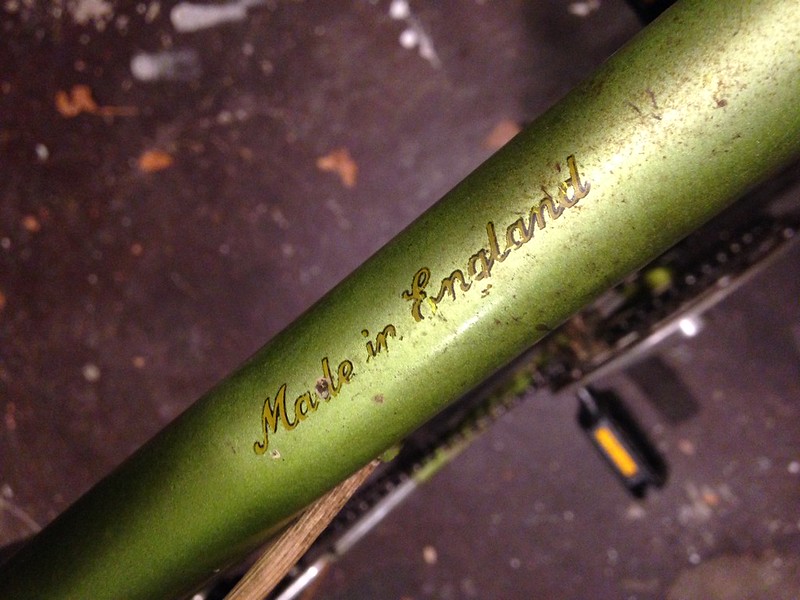
A genuine English Raleigh! I looked up the serial # to confirm it. 
Made in the Carlton factory… 
French made Huret front derailleur 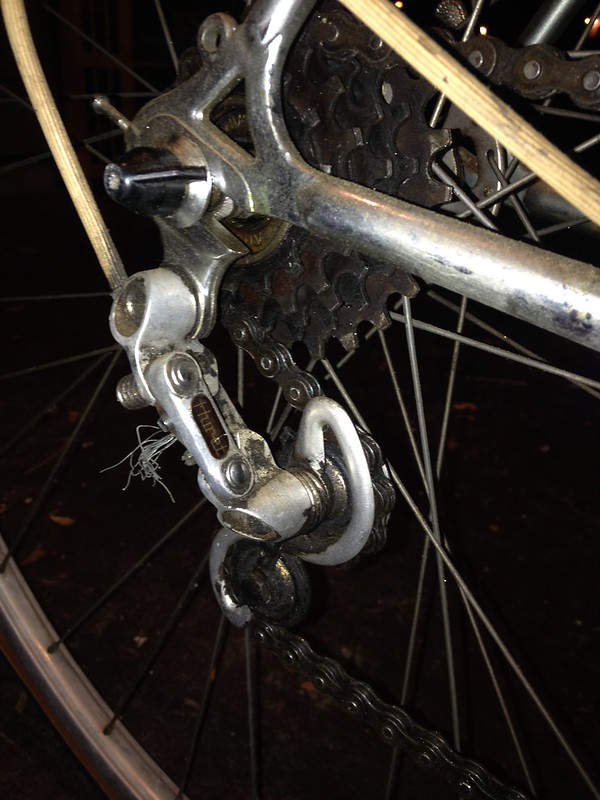
And a highly sought Huret Jubilee rear derailleur 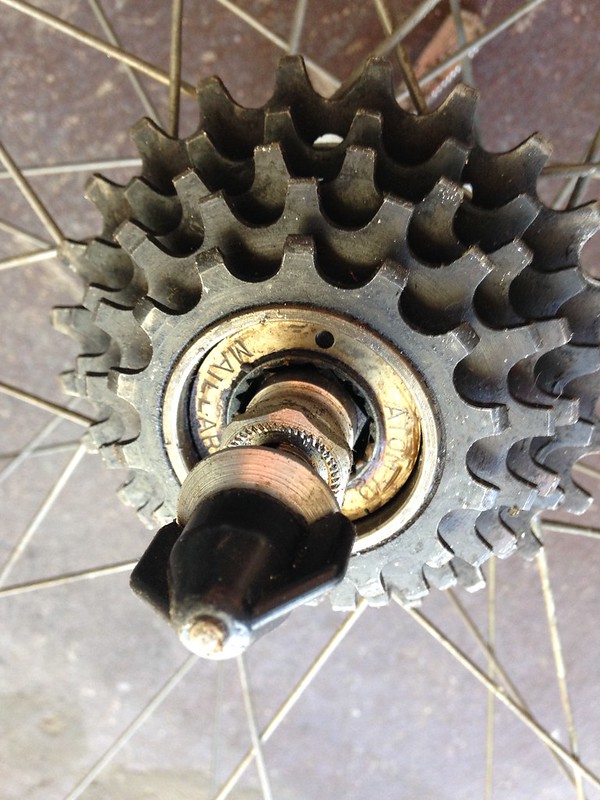
French threaded Maillard ATOM 70 5 speed freewheel 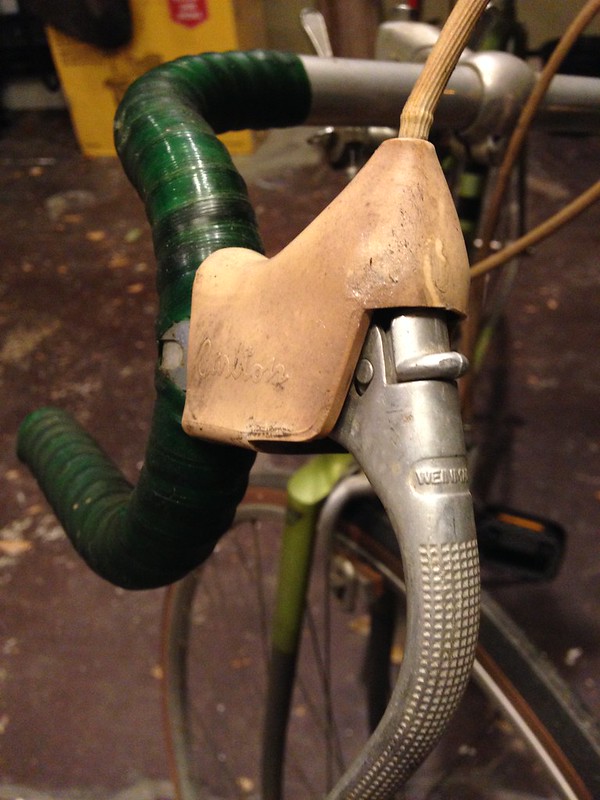
Carlton branded brake hoods with Weinmann levers 
Original GB stem with stem-mounted Huret shift levers 
French made Maillard 700 hubs were some of the best around in the 70’s.
Now that I had to home and had some pics and a general idea about the condition of the bike and it’s components, I took to the internet for some more research. The serial was stamped clear as day on the bottom bracket, and I used this website to determine what the numbers meant: WC4001417.
The bike was manufactured in the Worksop Carlton factory in England, sometime in February of 1974, and was bike #1417 made. 1974 was the Super Tourer’s first model year, but I don’t know if they started production in 1973 or not, plus I’m not 100% if the production number stamped is from just that month, or overall in the entire year. While the Super Tourer was not a hugely popular bike it might be safe to assume there was not a huge amount ever made so each one is a rare find despite it’s seemingly high production number.
As I learned more about the bike and why it was such a lucky find – I came to find the major components are what so many people coveted. Specifically the rear derailleur: a French made Huret Jubilee. Apparently, it [still is] one of the lightest derailleurs ever made. Not to mention it’s simplistic design was groundbreaking at the time – and even today. I’d have to agree with that conclusion – it’s a beautiful piece of tech.
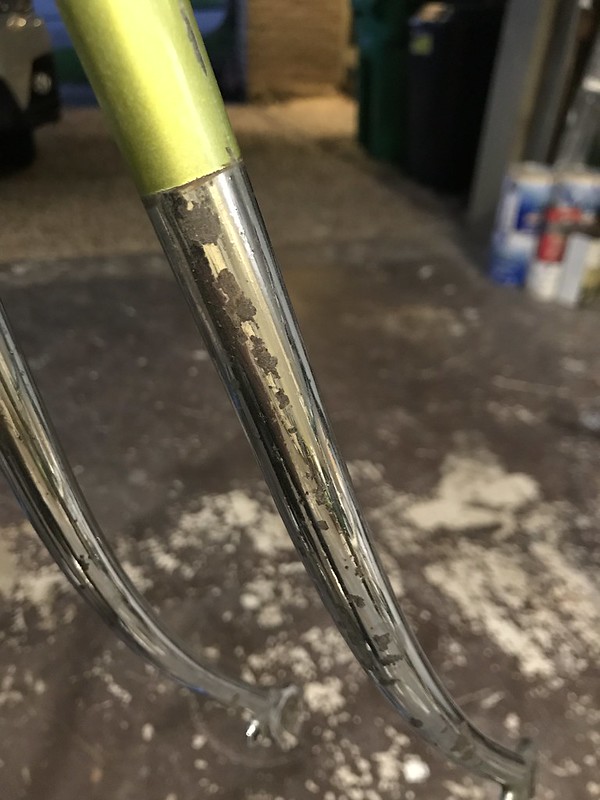
Everything was dirty, so I knew I’d have to clean the entire bike from top to bottom, along with all the parts. So it was time to break it down, see what condition the components were really in, and get to cleaning. I had to ask around to see what the best way was to clean rust off the chrome fork/stays, and specks all around the frame. It took a mix of using some Nevr-Dull metal polish, and some good old fashioned white vinegar rubbed on with aluminum foil (yes it works). Check out the slideshow below for a bunch of “before” pics during disassembly. The “after” pics will come shortly…

Almost all the chrome on the fork and chain stays had many spots of rusting 
These stem shifters were getting moved to the downtube, but the stem is in good shape. 
Rust on the top tube 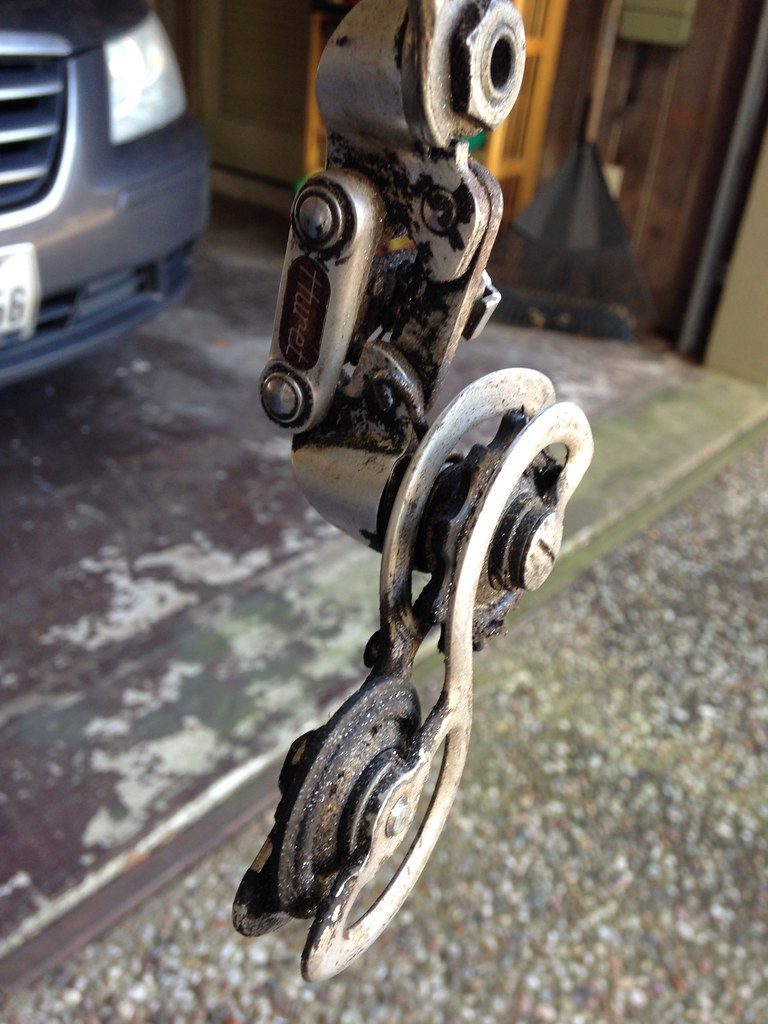
Rear derailleur lookin’ pretty dirty 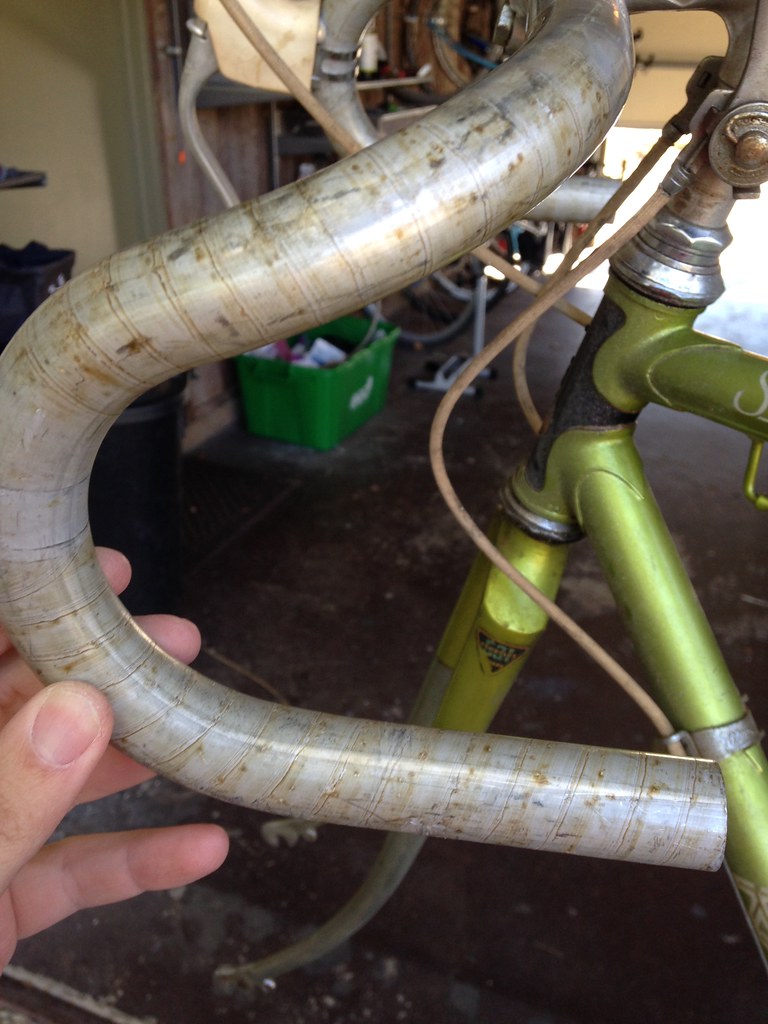
The old creepy rubbery tape was from the 70’s and left a terrible residue behind 
Original “mattress” saddle. This thing is a monster. No, I did not reuse it. 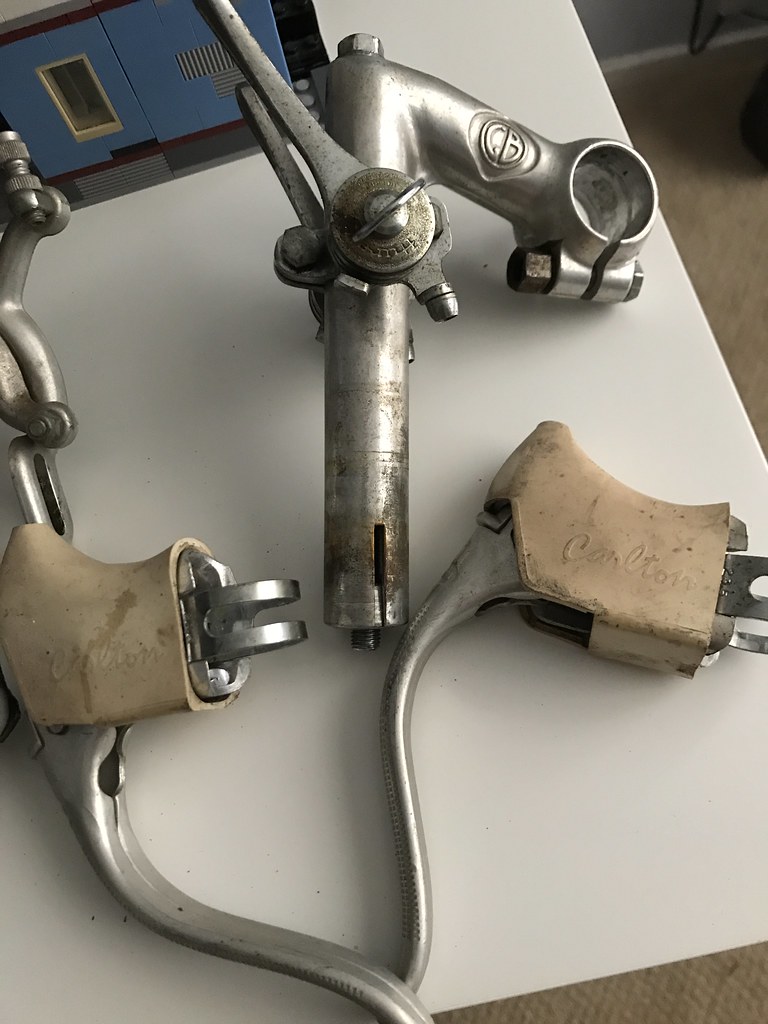
Brake hoods & stem/shifters awaiting cleaning 
Brakes before cleaning 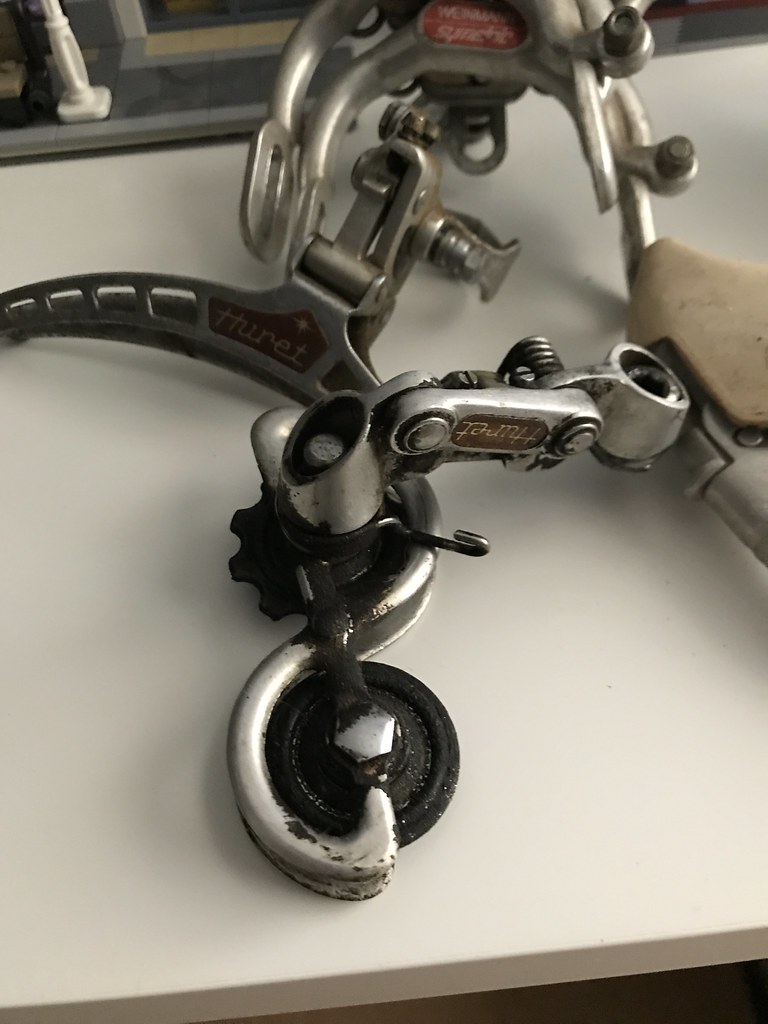
Front & rear derailleurs awaiting cleaning
Once I got the main parts off, I went after the frame to get it as sparkly as possible and removed as much rust as I could. The Nevr-Dull worked pretty well, as did the aluminum foil trick. It took a little time and elbow-grease, but it came out well enough for a 45 year old bike. The rust blotched came off the chrome fork and stays, but there wasn’t much I could do about the actual damage to the metal. With the rust gone, I cleaned the areas and then waxed the entire frame for some protection. Close up, you can see the damage easily, but its much less obvious when standing back and looking at the bike as a whole. See pics below:


With the frame done, I set off to clean all the bits. It was a mix of dirt, grime, & grease – some worse than others. A good soak in some water with de-greaser, some brushes, and some Nevr-Dull & WD40 really brought everything back to life. Now, the original parts aren’t bright silver chrome, they’re more of a duller brushed metal, so while the initial cleaning brought out some pretty good shine – it dulled back to normal after a few days. Still, I think they all looked great – again, not bad for 45 years….
Check out the slideshow & captions below for pics showing the cleaning process & results…
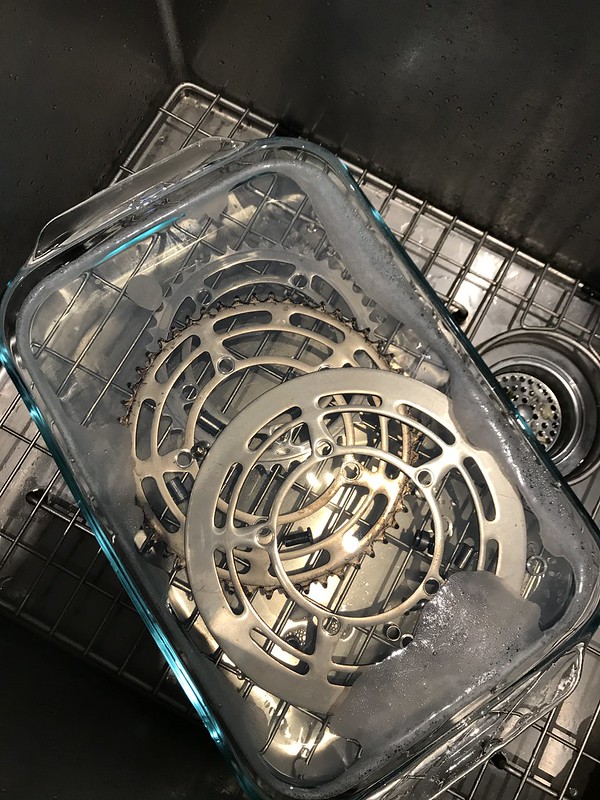
Took apart the crankset and let it soak in degreaser 
Out of the wash, wiped down, time to make it shine. 
Almost like new! 
Front derailleur shined up real nice. 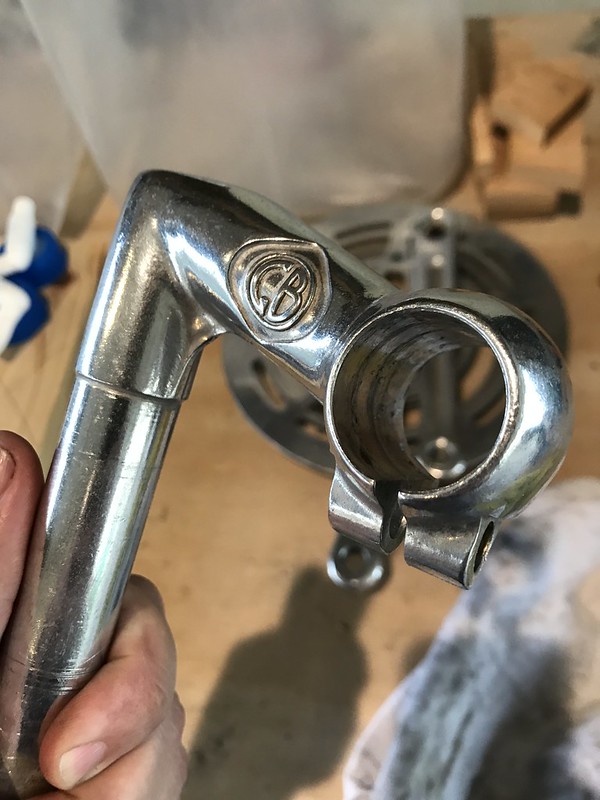
Nothing special about the standard GB stem, but at least it’s clean now. 
Dirty on the left, cleaned & polished on the right. 
Both hoods/levers cleaned. I think they were originally white, but, you know, time & grime… 
Brakes came out about normal, and I didn’t take a better pic of the cleaned rear derailleur. 
This beautiful freewheel.
So you’re probably wondering about the wheels, right? Of course you were. I brought them to a shop to get them checked out and trued up, but turns out too many of the spokes were rusted and seized so the wheels couldn’t be trued and brought back into perfect round. I was a little bummed because they were the original 27″ Weinmann wheelset, but it’s easy enough to get new 27″ wheels with better hubs. My shop ordered me a shiny set of 27″ Sun CR18 wheels in shiny as shit chrome, with decent Origin8 sealed hubs.
But there was a catch.
There’s always a catch.
That beautiful Maillard Atom 70 five-speed freewheel in the slideshow above? Well, it’s French threaded, to fit on the hubs of those old wheels that are now garbage. The shiny new wheels I just got? English threaded. Incompatible. Shit. I was bummed. That Maillard made the best sound when I spun it, and I wanted to use it so badly. The only way to use (and I plan on it in the future) is to have a set of wheels built up around the Maillard 700 hubs from the old wheels – yes I definitely saved those hubs.
I didn’t get a pic of them after I cleaned them up, so here’s a dirty one. But, they look lovely. So the next beautiful vintage bike I come across with bum wheels will have these hubs and a 5-speed freewheel ready to go.
Alright so everything is cleaned. Let’s put this sucker together.
Wait, I’m missing some pieces!
I decided when I first got the bike I wanted new bars, and wanted to move the shift levers to the downtube. I narrowed my choices down to Soma’s Brevet Randonneur Bar and Velo Orange’s Randonneur Bar. I ended up going with the Soma bar as I liked the profile/shape just a little more. Check the few pics below:
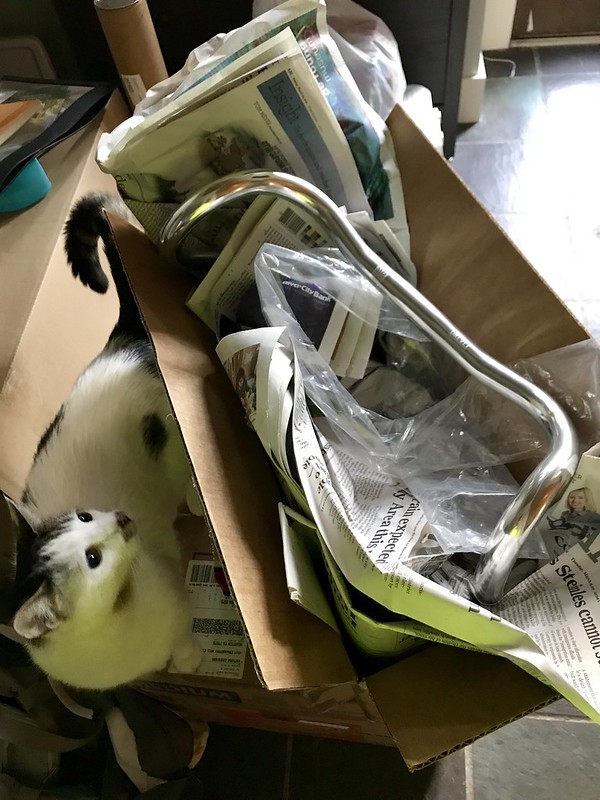
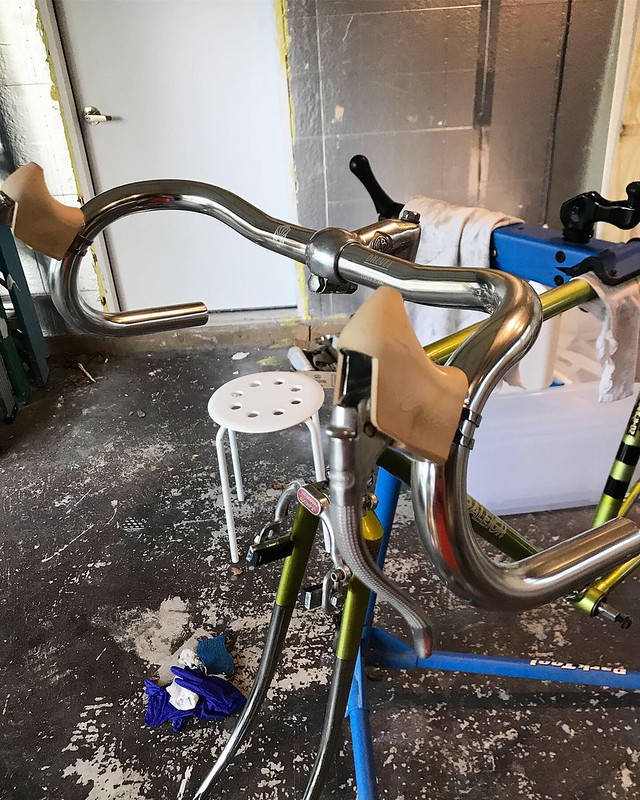
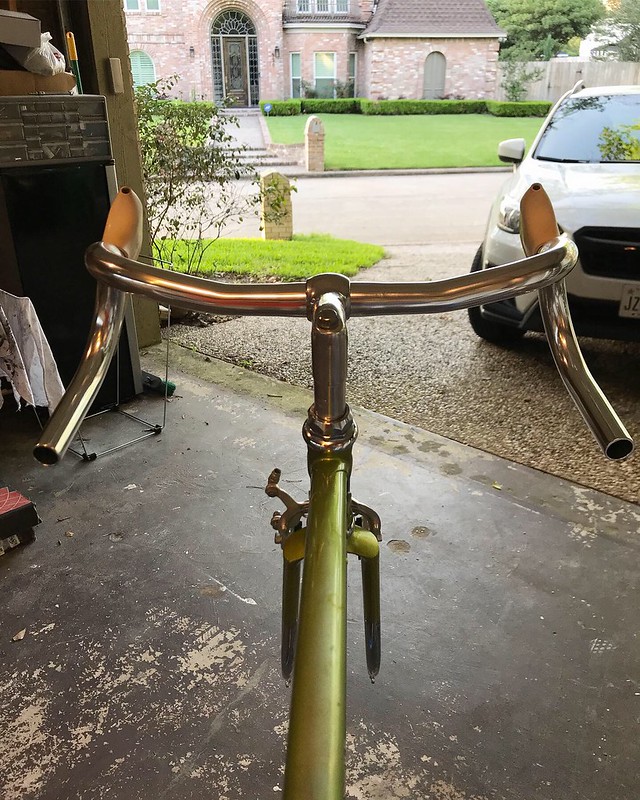
I had to turn to eBay for the downtube shifters. At first I made the mistake of just buying a shifter clamp – but turns out the levers that were attached to the stem were attached to that specific mount and couldn’t be transposed to the downtube clamp. So I wasted $20, but whatever, lesson learned! So back to eBay I went and found a Huret NOS downtube clamp with levers, so I was back in business. It was important to find a Huret model as I wanted to keep it periodic specific and consistent. It already had cables attached, and was ready to go after I clamped it on.


Since I couldn’t use the Maillard freewheel, I needed a new one – so back to eBay I went and found a 5 speed from Shimano. Nothing fancy, just a Uniglide low-end one that would work for now. Full disclosure: once I had the bike together and testing everything before riding I discovered the largest ring on the freewheel I got is too big for the rear derailleur to handle. The original Maillard one was geared 14-17-19-21-24, but the Shimano one I got was 14-28, and while it barely gets the chain onto the large ring, it won’t stay smoothly. Thankfully, there are other companies that make older style 14-24 freewheels so I’ll pick one up in the future. Thankfully, Houston is pretty flat so I rarely need the easy gears anyway.


Last but not least, I needed someplace to put my ass. That original mattress saddle was hilarious and huge, so I sprung for my very first ever legendary Brooks saddle. So far, my ass loves it.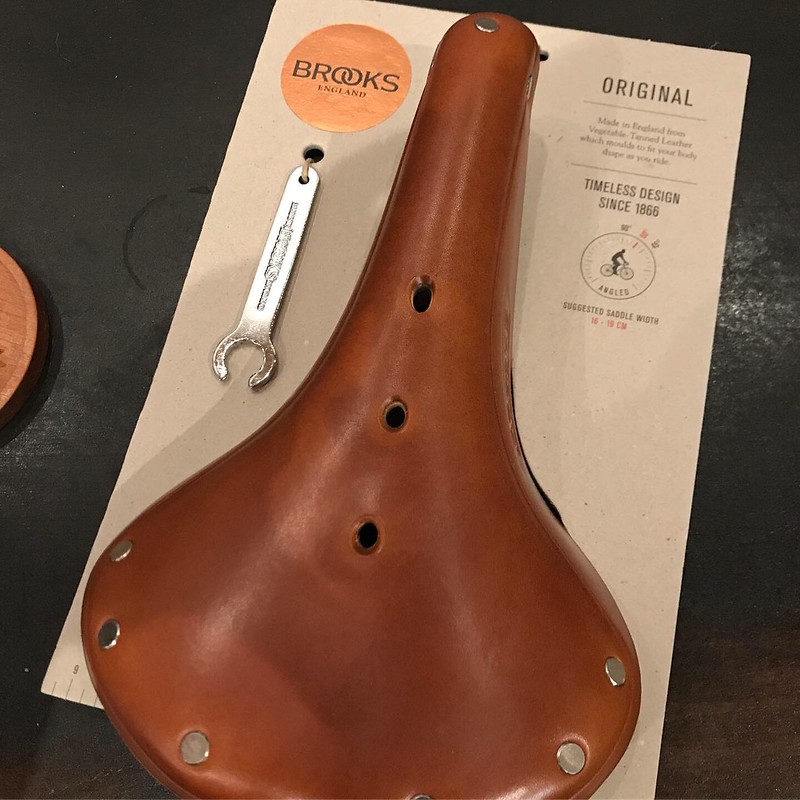
Wait, the saddle wasn’t last – I needed a rack, so I picked up a rear Pletscher “CLEM” rack from Rivendell Bike Works. Basically a newer model version of the classic Pletscher racks adorning bikes from the 60’s-80’s. You’ll see it in the finished pics coming up…
AND THEN I WAS DONE! Fully restored (mostly) 1974 Raleigh Super Tourer. Ready to see it? Slideshow below!


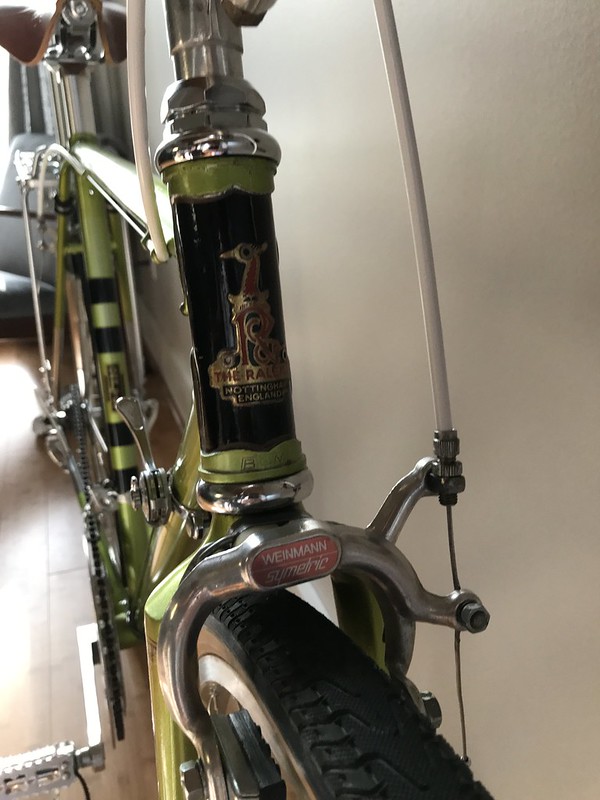

Pretty beautiful, eh?
I’ll admit I wasn’t in love with the combination of the bars & the hoods. The angle of the hoods combined with the shape of the levers made it really hard for my smaller hands to pull the levers effectively. This, combined with the notoriously unreliable braking quality of those 70’s Weinmann side-pull brakes, made the whole thing rather uncomfortable to ride. It had been 2 weeks, and I already needed to change stuff. But, such is bike life.
The Super Tourer’s original setup used Raleigh’s North Rounder riser bars, so my decision to use Randonneur bars wasn’t quite true to original form – and maybe this was the universe’s way of telling me I made the bike Gods angry.
I figured I wasn’t going to find an angle that worked with the older brake hoods on drop bars because of how they connect, and because of how the brake cables were done they levers were reversed (this was purely an aesthetic choice). So, I decided to try riser bars and get it closer to the original. I went with Soma’s Late Riser Bar, with it’s low rise and minimal back sweep angle.
This obviously meant I needed new brake levers as well, plus grips (seriously, switching bar types opens up a whole new can of worms – imagine if the shift levers weren’t isolated on the downtube already!). Velo Orange had a pretty good selection of old-school city style brake levers, so after some google image searching for ideas and how other people had used the various models, I decided on Tektro’s FL750 levers. I dug the clean lines and knew they’d look sharp as fuck with the bars.
I bought both the bar & the brakes from Retrogression, a Portland based singlespeed/fixie/track oriented shop. They’re a bad ass group of folks with some awesome equipment that’s hard to find elsewhere. Highly recommend them if you live in the area, or are shopping online.
Finally I needed some grips, so to match the Brooks saddle I had, I splurged on some Brooks leather grips. I mean, why not. The faux-leather bar tape I had on the Randonneur bars didn’t quite match, and it was thin and frankly I hated it (no offense to Fi’zi:k).
With these new parts all assembled, now, I was finally done, for real! I’ve been riding it this way for the last few weeks and it’s markedly more comfortable. The only think left to do is to switch out the Weinmann brakes because frankly they kinda suck. I found another old set of brakes in a parts swap so I’m going to try those – they’re even Raleigh branded.
The last last last last piece was a new trunk bag to haul my work clothes in (and anything else depending on my trip.) I went with a bag I’ve had my eye on since 2013 – Arkel’s Tailrider trunk bag. I loved it’s low profile shape, and carrying capacity. I’m able to fit in a pair of shoes, slacks, shirt, unmentionables, with extra room left for random needs for the work day. I can also fit all the bike repair essentials in the side pockets (tube, tools, CO2, levers) with room to spare. Highly recommend it.
So, finally, here we are at the end – the bike as it’s being ridden currently:


She’s a tank, for sure. With the rack I estimate she weighs in at almost 25-30 pounds. But the bike was never intended to be a fast bike. It’s not a cross-country trail bike, it’s not a racer. It was a tooling around bike. My commute is 9.8 mile each way and I do have faster bikes I do it on, but I ride this bike when the weather is nice and I don’t have any meetings or errands. This bike is purely for the enjoyment of riding a bike. An old vintage bike with some class. It takes me about 5 minutes longer on average when I ride it, but it doesn’t matter. This bike is a piece of bike history; short lived, highly sought. There aren’t many of them out there and I’m happy as hell to have it.
Oh, the 1974 model year version came it two colorways: bronze/silver for the 5-speed version, and chartreuse/black for the 10-speed (mine). So my wife thought of the perfect name for it:
The Chartreuse Goose.
Thanks for reading! If you have any questions, please feel free to leave comments.
 yankee.velo.foxtrot
That’s a sweet looking ride! Great read!
Pretty sure the Super Tourer was available for sale in the summer of 1973. My parents decided hfl. 979 for a bike was too much, so it became the cheaper Competition version for me.
I owe now since a month serial number WD5003707. Not if sure however if the third digit reads 6 (1976) instead of 5. But 1975 is consistent with serial 1417 in 1974, It means 2290 units in 13 months, averaging 176 per month. Production then should have arithmetically started June 1973
It’s possible as, like cars, the following calendar year model becomes available toward the later half of the previous current calendar year. Congrats on finding a Super Tourer! How’s the condition?
So gorgeous! I’ve used the same brake levers on a vintage build and flipped the logo upside down for a cleaner look. It’s a drop bar now? Looks great as both.
I have the same cranks that oddly came on my 76 Raleigh Competition. It must’ve been a special request or switch.
the drop bars didn’t work for me so I switched tot he riser bar. I think the Stronglight cranks found there way onto a lot of Raleighs in the 70s.
I have one exactly like it. Fenders and all. I’ve been thinking of selling it since I recently moved to the country and don’t have a place to ride. When I lived in the city it was my main source of transpo. People see that bike and get jealous instantly. What do you think it would sell for nowadays?
The used market ain’t what it used to be – even for vintage bikes, unless you can find a collector. I ended up selling mine for $400, despite it being worth at least $600, given it’s rarity and the new parts I put into it. Best chance is to put it on eBay and hope a collector finds it.